How Hybrid Vehicles Work Technology, Benefits, and Their Role in Electrification
Electric Vehicles
|
April 28, 2026
As the automotive industry evolves, hybrid vehicles have emerged as a compelling solution for drivers seeking a balance between fuel efficiency and performance. A hybrid vehicle integrates a traditional internal combustion engine with an electric propulsion system, utilizing both power sources to enhance fuel economy and reduce emissions. Importantly, some hybrids are classified as plug-in hybrids (PHEVs), which can connect to an electrical outlet for battery recharging, allowing them to operate on electric power alone for short distances. This capability not only contributes to lower fuel costs but aligns with consumers’ growing preference for eco-friendly alternatives. Understanding the significance of hybrids in the current automotive landscape is essential, especially in a world grappling with climate change and fluctuating fuel prices, making these vehicles an attractive option for many.
1. How a Hybrid Powertrain Works
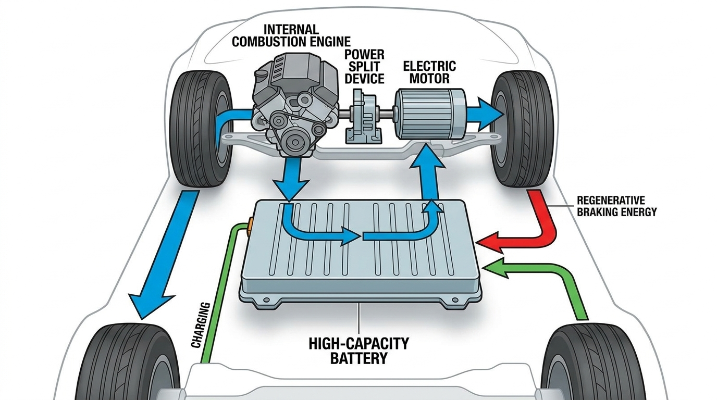
A hybrid powertrain integrates an internal combustion engine (ICE) and an electric motor, supported by a high-capacity battery, ensuring seamless operation for enhanced performance and efficiency. The internal combustion engine generates power in a manner similar to conventional vehicles, while the electric motor provides additional torque and can operate independently, especially during low-speed driving, thereby conserving fuel.
The battery stores energy that can be charged through regenerative braking or directly through the engine, optimizing energy usage. Advanced control systems manage the interaction between the engine and the motor, determining the optimal use of each component based on real-time driving conditions. This technological fusion empowers hybrids to achieve better fuel economy and reduced emissions compared to their purely gasoline counterparts.
The benefits of hybrid systems are profound; they provide improved fuel efficiency, often leading to lower fuel expenses and reduced dependency on fossil fuels. Innovative features such as regenerative braking and adaptive energy management enhance the driving experience by capturing energy otherwise wasted and automatically adjusting power distribution for peak performance. Ultimately, a hybrid powertrain signifies a vital evolution in automotive technology, catering to environmentally conscious consumers without compromising power or convenience.
2. Types of Hybrid Vehicles
Hybrid vehicles synthesize traditional internal combustion engines with electric propulsion, resulting in enhanced fuel efficiency and diminished emissions. Familiarizing yourself with the various types of hybrids can assist in making informed purchasing decisions based on individual needs and priorities.
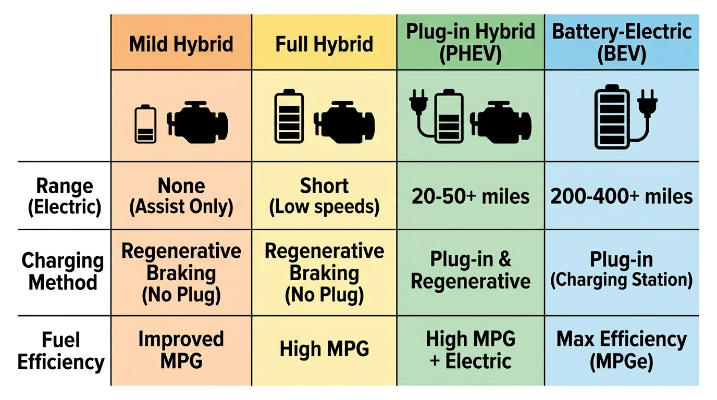
- Mild Hybrids: These vehicles utilize a small electric motor alongside a gasoline engine. While they enhance fuel efficiency, mild hybrids do not permit electric-only operation. The electric motor assists mainly during acceleration and provides some regenerative braking benefits. This type usually incurs lower costs and complexities compared to other hybrids.
- Full Hybrids: Equipped with both a gasoline engine and a larger electric motor, full hybrids can run solely on electric power for limited distances. This configuration allows greater versatility in driving modes, allowing for full electric, gasoline, or a hybrid approach. Full hybrids are typically more efficient in urban settings characterized by stop-and-go traffic.
- Plug-in Hybrids: Plug-in hybrids (PHEVs) can be charged from an external power source, offering a more extended range of electric driving capability compared to traditional hybrids. They run on electric power for prolonged periods and seamlessly switch to gasoline when the battery is depleted, making them adaptable for various driving scenarios.
- Battery-Electric Vehicles: Although not hybrids in the traditional sense, battery-electric vehicles (BEVs) are entirely powered by electricity and contain no gasoline engine. They require regular charging from electric outlets, producing zero tailpipe emissions, thus presenting an eco-friendly option that depends significantly on the availability of charging infrastructure.
In conclusion, drivers should assess their lifestyles, driving habits, and charging availability when selecting between mild hybrids, full hybrids, plug-in hybrids, and battery-electric vehicles, ensuring they choose the right fit for their needs.
3. Powertrain Layouts: Series, Parallel, and Power-Split
Hybrid vehicles operate with distinct powertrain layouts, each crafted to accommodate unique driving demands and efficiency requirements. The three predominant configurations are series, parallel, and power-split.
Series Powertrain
In a series layout, the internal combustion engine (ICE) acts strictly as a generator to recharge the electric motor. This system can be likened to a generator powering a tool: the motor drives the wheels using electric energy. Series hybrids perform exceptionally well in urban environments, where lower speeds enable effective electric propulsion, but they may face challenges at higher speeds where engine efficiency is compromised.
Parallel Powertrain
Parallel hybrids utilize both the ICE and the electric motor simultaneously or independently to power the wheels. Visualize a bicycle with two riders using separate pedals; either can contribute to propulsion. This configuration excels in highway scenarios, where it efficiently integrates both power sources. However, it requires complex coordination to guarantee smooth transitions between energy sources.
Power-Split Powertrain
The power-split hybrid merges elements of both series and parallel systems through a sophisticated mechanism that optimizes power distribution. Picture a busy intersection with multiple routes—vehicles can select the optimal path based on real-time conditions. This layout provides flexible power sourcing, enhancing performance across diverse driving situations, making it suitable for varied terrains.
In summary, a thorough understanding of these powertrain layouts enables prospective hybrid vehicle buyers to identify models that align with their driving style and requirements, highlighting the diverse options available in hybrid technology.
4. Fuel Economy and Regenerative Braking
Hybrid vehicles have significantly improved fuel economy due to their unique powertrains, which blend traditional gasoline engines with electric motors. When evaluating efficiency, metrics such as MPG (miles per gallon) and MPGe (miles per gallon equivalent) are crucial benchmarks. While MPG is key during highway driving, city driving yields noteworthy advantages from regenerative braking systems. This technology harnesses kinetic energy during deceleration, transforming it into electrical energy to recharge the battery, thus bolstering overall efficiency.
In practical scenarios, drivers may notice differences in efficiency ratings between city and highway driving. Urban driving typically results in lower MPG figures while benefiting more from regenerative capabilities, making hybrids particularly advantageous in metropolitan settings. Conversely, highway conditions facilitate improved MPG but minimize regenerative braking usage.
Ultimately, potential buyers should evaluate both MPG and MPGe ratings when considering a hybrid vehicle, acknowledging that real-world fuel economy may vary based on driving habits, terrain, and climate. This comprehensive understanding is essential for making informed purchasing decisions in alignment with fuel efficiency goals and individual driving needs.
5. Ownership Costs: Pros, Cons, and Maintenance
Owning a hybrid vehicle presents a blend of appealing advantages and potential drawbacks. The initial purchase price for hybrids tends to be higher than that of traditional gasoline vehicles, which can deter some buyers. However, this upfront cost may be countered by substantial fuel savings over time. Due to their dual powertrains, hybrid drivers often experience reduced fuel expenditures, particularly in city driving scenarios facilitated by regenerative braking.
Maintenance aspects for hybrids can also differ. Although many components resemble those in conventional vehicles, hybrids may need specialized servicing for their battery systems, critical for long-term performance. Fortunately, most manufacturers offer significant warranties for hybrid batteries, easing concerns about replacement costs in the years following purchase.
Consideration must also be given to cargo space, as the hybrid battery's placement can impact trunk dimensions. Additionally, while access to charging infrastructure has improved, the need for regular charging in plug-in hybrids can limit convenience in comparison to purely gasoline models. Overall, hybrid vehicles can offer a smooth and quiet driving experience, making them an attractive option, yet they necessitate careful reflection on cost factors and practical use.
In conclusion, the ownership experience associated with hybrid vehicles encompasses both benefits and considerations; understanding these variables enables potential buyers to assess whether hybrids align well with their unique needs and lifestyle preferences.
6. Who Should Consider Each Type
When contemplating the right hybrid vehicle, assess your driving habits and access to charging stations. Urban commuters who frequently navigate congested traffic may find plug-in hybrids (PHEVs) particularly advantageous, as they allow for extended electric-only ranges and convenient home charging. In contrast, those whose driving patterns include longer highway trips with limited charging availability may prefer traditional hybrids, striking a balance between fuel efficiency without reliance on charging infrastructure. Additionally, individuals with access to charging stations at work or with regular charging options may discover that fully electric vehicles are the most efficient choice, maximizing sustainability while eliminating gasoline reliance.
7. Buying Checklist for Hybrid Vehicles
When considering the acquisition of a hybrid vehicle, potential buyers should scrutinize the following factors:
- Price Range: Evaluate the complete cost of the vehicle, including any applicable tax incentives or rebates for hybrids.
- Charging Infrastructure: Research the availability and convenience of charging stations in your vicinity, particularly if considering a plug-in hybrid.
- Driving Range: Assess the distance the vehicle can cover on electric power alone versus the total range with gasoline.
- Vehicle Type: Determine the hybrid variant (e.g., full hybrid, plug-in hybrid, or mild hybrid) that aligns best with your lifestyle.
- Fuel Efficiency: Compare fuel consumption rates across models to estimate potential long-term gasoline savings.
- Warranty and Maintenance: Review warranty coverage, especially for the battery, and anticipate any unique maintenance expenses related to hybrid vehicles.
- Resale Value: Investigate the depreciation rates and resale values for the hybrid models under consideration to gain insight into future value.
Utilizing this checklist can streamline the decision-making process for prospective hybrid vehicle purchasers.
Choosing the Right Hybrid for You
In summary, understanding the intricacies of hybrid vehicles empowers consumers to make informed decisions tailored to their specific needs and lifestyle preferences. This article has explored the technology, efficiency, and maintenance considerations related to hybrids, emphasizing their growing importance in today’s automotive market. As fuel efficiency becomes increasingly pivotal in our evolving environment, hybrid vehicles present a viable solution harmonizing performance with sustainability. Potential buyers must evaluate their priorities and circumstances when selecting a hybrid vehicle, ensuring that they choose a car that aligns with their driving habits and environmental values.
Related Posts
Best Car Floor Mats A Complete Buying Guide for Interior Protection

Car Phone Holders A Practical Guide to Choosing the Right Mount for Everyday Driving
Wireless Car Chargers A Practical Guide to Choosing Fast and Reliable Charging on the Road
OBD2 Scanners Explained How To Diagnose Your Car Using Your Phone

10 Must-Have Car Accessories for Rainy Season That Actually Keep You Safe